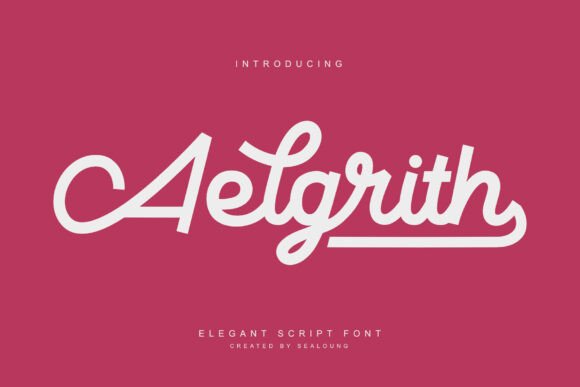
Aelgrith Typeface Evaluation
Selecting the right typeface is a critical step in visual communication. The choice often dictates the tone, readability, and overall success of a design project. Aelgrith is an elegant script font designed to bring refined strokes and graceful curves to digital and print media. It is positioned as a tool for creating sophisticated visual identities, particularly for branding, logos, and cover designs. This evaluation explores the specific characteristics of Aelgrith, its technical capabilities, and the scenarios where it serves as a strong candidate compared to other typographic options.
Understanding the Design Philosophy
Aelgrith distinguishes itself through its execution of script typography. Unlike casual or handwritten fonts that prioritize spontaneity, this typeface focuses on elegance and structure. The character set features fluid transitions between letters, mimicking the flow of calligraphy while maintaining the legibility required for professional applications. The "refined strokes" mentioned in its description suggest a high level of attention to detail in the weight and curvature of each glyph.
The primary appeal of Aelgrith lies in its ability to convey luxury and sophistication without appearing overly ornate. For designers working on wedding invitations, high-end product labels, or editorial covers, the font offers a way to elevate the perceived value of the content. It bridges the gap between traditional serif aesthetics and modern script trends, providing a versatile foundation for creative vision.
Technical Capabilities and Versatility
One of the most significant factors in evaluating a modern typeface is its technical robustness. Aelgrith includes over 300 unique glyphs. This extensive character count is not merely a metric for quantity; it directly impacts the font's utility in real-world projects. A large glyph set typically ensures better support for multilingual communication, allowing global brands to maintain consistent typography across different languages.
The inclusion of stylistic alternates is another key feature. These are alternative versions of standard characters that allow designers to introduce variety and personality into their work. By enabling users to swap out specific letterforms, Aelgrith prevents the repetitive look often found in standard text settings. This customization capability is essential for creating a personalized touch that can make a brand identity feel bespoke rather than generic.
- Multilingual Support: The extensive glyph set facilitates use in international markets, reducing the need to switch typefaces for different language requirements.
- Stylistic Flexibility: Alternates provide opportunities for micro-adjustments in design, ensuring that no two words look exactly alike.
- Ligature Options: While not explicitly detailed in all descriptions, fonts with this many glyphs often include ligatures to improve the flow between common letter combinations.
Ideal Use Cases for Aelgrith
Determining whether Aelgrith aligns with your goals requires understanding where script fonts perform best. This typeface is not intended for body text or long-form articles where readability is paramount. Instead, it excels in display contexts where impact and aesthetic appeal are the primary objectives.
Branding and Logos: For businesses aiming for a premium image, such as fashion boutiques, jewelry stores, or luxury hospitality services, Aelgrith provides a strong foundation. Its graceful curves can soften a logo while retaining a sense of authority.
Event Stationery: Wedding invitations and formal event programs benefit from the romantic and elegant nature of the font. The stylistic alternates allow for unique monograms and custom headers that stand out against traditional serif options.
Cover Design: In publishing, book covers or album art often rely on typography to set the mood. Aelgrith can create a memorable visual hook that draws the viewer in before they even read the title.
Potential Tradeoffs and Considerations
While Aelgrith offers significant aesthetic benefits, there are practical considerations that designers must weigh. Script fonts inherently carry higher cognitive load than sans-serif or standard serif fonts. If used excessively, the intricate details can become difficult to read, especially at smaller sizes or on low-resolution screens.
Legibility Challenges: The very features that make Aelgrith elegant—such as connected strokes and decorative elements—can reduce clarity in dense text blocks. It should be paired with a neutral, highly readable typeface for any supporting text.
Contextual Appropriateness: The "luxurious" feel of the font may clash with industries that prioritize minimalism, functionality, or urgency, such as technology startups, emergency services, or industrial manufacturing. Using Aelgrith in these contexts could send mixed signals about the brand's values.
File Size and Performance: Fonts with over 300 glyphs and multiple stylistic sets tend to have larger file sizes. For web projects requiring fast loading times, this overhead must be managed carefully, potentially using subsetted font files to include only necessary characters.
Comparative Analysis: When to Choose Alternatives
Evaluating Aelgrith also involves considering what it is not. If a project requires a clean, modern, and universally accessible look, a geometric sans-serif might be a more effective choice. Similarly, if the goal is to evoke a vintage or retro feel, a brush script or a classic blackletter might offer better historical accuracy.
For projects demanding strict grid alignment or technical precision, the organic curves of Aelgrith may introduce unwanted visual noise. In these cases, a structured serif or a humanist sans-serif would provide the stability needed without sacrificing style. Additionally, if budget constraints are tight, free alternatives with similar aesthetic profiles might be worth exploring, though they may lack the comprehensive glyph set and stylistic control offered by Aelgrith.
Decision-Making Insights
To determine if Aelgrith is the right fit, designers should ask specific questions about their project requirements. Does the brand voice align with elegance and refinement? Is the primary medium static (print) or dynamic (web), and does the font render well in both environments? Are there specific multilingual needs that require the extended glyph set?
If the answer to these questions is affirmative, Aelgrith presents a compelling option. It allows for a visual identity that resonates emotionally with the audience, making every word felt rather than just read. However, if the priority is maximum readability or a minimalist aesthetic, the decision should lean towards a more functional typeface.
Ultimately, the success of Aelgrith depends on its application. Used strategically as a display font to anchor a design, it enhances the overall aesthetic effortlessly. Used indiscriminately, it risks compromising clarity. By balancing its ornamental strengths with practical limitations, designers can leverage Aelgrith to create striking, memorable, and sophisticated visual communications.