Twizler Script Font Evaluation
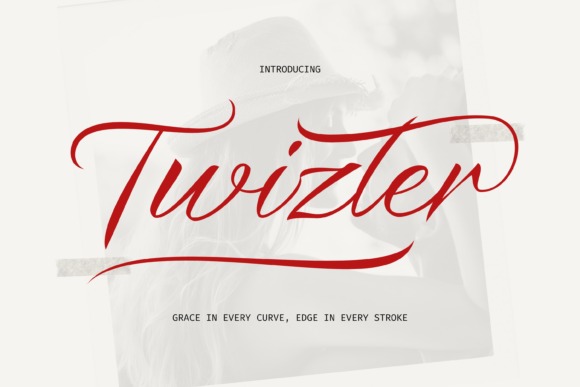
Designers and brand strategists often face the challenge of selecting a typeface that bridges the gap between traditional elegance and contemporary edge. Twizler is a modern script font designed specifically to address this need. Handcrafted to mimic the natural flow of calligraphy, it combines graceful curves with sharp, tapered endings. This unique combination allows the typeface to convey sophistication while maintaining a distinct sense of attitude. For professionals evaluating typefaces for specific projects, understanding the structural nuances and application scope of Twizler is essential before making a final selection.
Understanding the Design Characteristics
At its core, Twizler is not merely a decorative display font; it is a functional script engineered for readability without sacrificing artistic flair. The design philosophy centers on the contrast between fluid motion and precise termination. While many script fonts lean heavily into either soft, rounded forms or rigid, geometric structures, Twizler occupies a middle ground. Its sweeping lines create a sense of movement, guiding the eye naturally across the text. However, the pointed terminals and sharp edges introduce a layer of drama that prevents the font from appearing overly delicate or generic.
The "handcrafted" nature of the font implies irregularities in stroke weight and connection points that replicate the organic imperfections of human handwriting. This characteristic is crucial for branding that aims to feel personal and authentic rather than mass-produced. The subtle edge mentioned in its definition comes from these tapered endings, which add a dynamic quality to words that standard serif or sans-serif fonts cannot achieve. When used correctly, this balance ensures that the message feels both striking and refined.
Primary Applications and Use Cases
Evaluating where Twizler fits best requires looking at industries and contexts where personality is as important as clarity. The font's ability to blend beauty with boldness makes it particularly suitable for several high-impact scenarios.
- Wedding Suites and Invitations: In the wedding industry, typography sets the tone immediately. Twizler offers the romantic flow expected in bridal stationery but avoids the cloying sentimentality of older script styles. The sharp terminals provide a modern twist that appeals to couples seeking a sophisticated yet trendy aesthetic.
- Feminine Branding: Brands targeting female demographics often require a visual identity that is approachable yet empowered. Twizler serves this demographic well because it balances delicacy with strength. It works effectively for logos in cosmetics, fashion boutiques, and lifestyle blogs where a touch of drama enhances the brand story.
- Editorial Designs: Magazine headers, feature article titles, and book covers benefit from the dramatic flair of Twizler. Its sweeping lines can capture attention quickly in a crowded layout, acting as a visual anchor that draws the reader into the content.
- Logo Design: For small businesses or startups aiming for a custom, bespoke look, Twizler provides a versatile foundation. The connected letterforms can be adapted to create monograms or full-word marks that stand out against competitors using more conventional typefaces.
Benefits and Tradeoffs
When considering Twizler for a project, designers must weigh its distinct advantages against potential limitations. The primary benefit is its versatility within the script category. Unlike highly stylized fonts that are difficult to read in long-form text, Twizler maintains a level of legibility that allows for short headlines and prominent text elements. The "spark of bold personality" ensures that designs do not feel flat or one-dimensional.
However, there are tradeoffs to consider. The sharp, tapered endings, while visually striking, can sometimes reduce legibility if the font size is too small or if the resolution is low. In digital environments with varying pixel densities, these fine points may render poorly, leading to a jagged appearance. Additionally, the high level of detail in the handcrafted strokes means that the font may not scale down effectively for very small UI elements or mobile interfaces where clarity is paramount.
Another consideration is the pairing of Twizler with other typefaces. Because Twizler carries so much visual weight and character, it requires complementary fonts that do not compete for attention. A simple sans-serif or a classic serif usually pairs best to let the script shine. If paired with another decorative font, the design can quickly become cluttered and confusing.
Situations Requiring Alternatives
While Twizler is an excellent choice for many applications, it is not a universal solution. There are specific situations where alternative typefaces would be more appropriate. If the goal is to convey strict professionalism, such as in legal documents, financial reports, or corporate annual statements, the dramatic flair of Twizler may be perceived as unprofessional or distracting. In these contexts, neutral, stable typefaces are preferred to ensure the focus remains on the data and information.
Furthermore, for body text or long-form reading, Twizler is generally unsuitable. The varying stroke widths and connected letters can cause eye fatigue when readers have to process large blocks of text. In such cases, a dedicated serif or sans-serif font designed for paragraph setting should be utilized. Similarly, if a project requires a minimalist aesthetic devoid of ornamentation, the "subtle edge" of Twizler might be too busy. Minimalist designs often rely on negative space and simple geometry, which conflicts with the flowing, detailed nature of this script.
Practical Decision-Making Insights
To determine whether Twizler aligns with your specific goals, start by defining the emotional response you want to evoke in your audience. Do you want them to feel inspired, elegant, and slightly edgy? If so, Twizler is a strong candidate. If you need to communicate efficiency, neutrality, or authority, you should look elsewhere.
It is also advisable to test the font in context. Create mockups of your intended use case, such as a logo on a business card or a headline on a website banner. Observe how the sharp terminals interact with the background and how the sweeping lines guide the viewer's eye. Pay close attention to kerning; script fonts often require manual adjustment to ensure the spacing between characters looks natural. Automated spacing settings rarely produce the optimal result for handcrafted scripts.
Finally, consider the longevity of the design. Trends in typography shift frequently, and a font with a strong "personality" can date quickly if it relies too heavily on current fads. Twizler strikes a balance by blending classic calligraphic roots with modern execution, suggesting a timeless quality that may extend the lifespan of your design. By carefully evaluating these factors, designers can make informed decisions that leverage the strengths of Twizler while avoiding its limitations.
In conclusion, Twizler represents a compelling option for those seeking a script font that does not compromise on style. Its unique blend of grace and grit makes it a valuable tool for wedding suites, feminine branding, and editorial work. However, success depends on applying it to the right projects and pairing it thoughtfully with supporting elements. When used with strategic intent, it elevates visual communication by adding a layer of sophistication and attitude that resonates with modern audiences.