Thick Notepad: A Comprehensive Guide to Its Design Identity and Strategic Use
In the expansive world of digital typography, finding a typeface that balances artistic flair with professional utility can be challenging. Thick Notepad has emerged as a distinctive option for designers seeking a font that bridges the gap between traditional calligraphy and modern graphic design. This script typeface is defined by its elegant strokes and fluid curves, offering a visual language that feels both hand-crafted and meticulously polished. Unlike rigid sans-serifs or overly ornate decorative fonts, Thick Notepad occupies a unique niche where contemporary charm meets refined sophistication.
Understanding the specific characteristics of this font is essential before integrating it into a project. It is not merely a stylistic choice but a functional tool that influences the tone of communication. Whether you are designing a wedding invitation, creating a luxury brand logo, or crafting social media content, the decision to use Thick Notepad involves evaluating its distinct features against your project's specific goals. This analysis explores what makes the font stand out, how it compares to broader typographic categories, and when it serves as the optimal solution versus when an alternative approach might be necessary.
Defining the Character of Thick Notepad
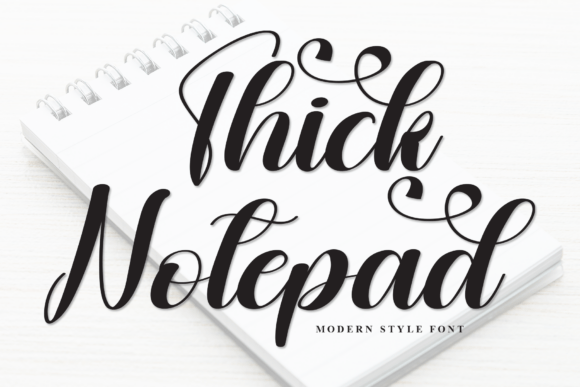
The primary distinction of Thick Notepad lies in its ability to capture the organic movement of hand-drawn calligraphy while maintaining the structural integrity required for digital applications. The letterforms are carefully crafted to ensure that each character flows naturally into the next, creating a sense of rhythm and continuity that static fonts often lack. The "thick" aspect of the name refers to the substantial weight of the strokes, which gives the text a bold presence without appearing heavy or cumbersome.
This font exudes elegance through its graceful transitions. The fluid curves soften the overall aesthetic, making it ideal for contexts where warmth and personal touch are paramount. However, it avoids the pitfalls of illegibility that often plague script fonts. The designer has managed to keep the letterforms clear and readable, ensuring that the beauty of the script does not come at the expense of communication. This balance is crucial for professional use, where clarity remains a top priority.
When examining the details, one notices the polished finish on the terminals and the varying stroke widths that mimic the pressure of a nib pen. These nuances add depth to the design, allowing it to stand out in crowded visual environments. For brands looking to convey a sense of exclusivity or high-end quality, these subtle details contribute significantly to the perceived value of the final output.
Evaluating Fit: Where Thick Notepad Excels
Selecting the right typography is about aligning the visual style with the intended message. Thick Notepad finds its strongest application in scenarios that require a blend of formality and artistic expression. Its versatility allows it to adapt to various mediums, from physical print materials to digital interfaces.
- Event Invitations: The font's romantic and sophisticated nature makes it a natural fit for weddings, galas, and formal dinners. It sets an immediate tone of celebration and refinement, guiding the recipient's emotional response before they even read the event details.
- Brand Logos: For businesses in the lifestyle, fashion, or artisanal sectors, this script offers a way to establish a unique identity. It suggests craftsmanship and attention to detail, qualities that resonate well with consumers seeking premium experiences.
- Packaging Design: In product packaging, particularly for cosmetics, confectionery, or gourmet foods, Thick Notepad adds a layer of tactile appeal. The flowing lines suggest luxury and care, helping products stand out on crowded retail shelves.
- Social Media Graphics: As visual content becomes increasingly saturated, a distinctive font can break through the noise. The stylish script works effectively for quotes, announcements, and promotional posts where engagement relies on aesthetic appeal.
In these contexts, the font acts as more than just text; it functions as a visual anchor that reinforces the brand's personality. The natural flow of the letters guides the eye smoothly across the composition, enhancing readability while maintaining an artistic edge.
Navigating Tradeoffs and Limitations
While Thick Notepad offers significant advantages, no single typeface is universally applicable. Designers must be aware of the inherent tradeoffs associated with using a stylized script font. The most critical limitation is legibility in small sizes or low-resolution environments. Because the font relies on intricate details and fluid connections, reducing it too much can cause the strokes to merge, rendering the text unreadable.
Furthermore, the strong stylistic voice of Thick Notepad can sometimes overpower other design elements. When used excessively or paired incorrectly, it may dominate a layout, leaving little room for supporting imagery or secondary information. This is a common challenge with display fonts that possess such a distinct character. Careful hierarchy and spacing are required to ensure that the font enhances rather than overwhelms the message.
Another consideration is the context of usage. While perfect for creative industries, this font may feel out of place in corporate, technical, or minimalist designs. If a project requires a neutral, objective, or highly structured appearance, the organic nature of Thick Notepad might introduce unintended associations of informality or whimsy. In such cases, a more geometric or humanist sans-serif would likely serve the communicative goal better.
Comparative Analysis: Script vs. Modern Alternatives
To make an informed decision, it is helpful to compare Thick Notepad against other typographic approaches. The landscape of design fonts generally falls into two broad categories relevant here: standard scripts and modern geometric styles.
Standard scripts often prioritize historical accuracy or extreme ornamentation. Some traditional calligraphy fonts can be difficult to read and may feel dated depending on the execution. Thick Notepad differentiates itself by incorporating a modern twist. It retains the elegance of classic handwriting but simplifies the complexity to suit contemporary tastes. This makes it more versatile for current design trends that favor clean, accessible aesthetics over baroque intricacy.
On the other end of the spectrum are modern geometric fonts, which offer clarity and neutrality. These fonts are excellent for data presentation, user interfaces, and corporate branding. However, they often lack the emotional resonance and personality that Thick Notepad provides. If the goal is to evoke a feeling of warmth, creativity, or personal connection, a geometric font will fall short. Conversely, if the priority is absolute clarity and speed of reading, the script font may be less effective.
The decision often comes down to the specific needs of the audience. For adult audiences aged 20 to 50 who are evaluating options for a project, the choice usually hinges on the desired emotional impact. Are you trying to build trust through stability (favoring modern sans-serifs) or building desire through aspiration (favoring Thick Notepad)? Understanding this dynamic helps clarify why one might choose this script over a more conventional alternative.
Strategic Decision Factors for Implementation
Before committing to Thick Notepad, designers should consider several practical factors. First, assess the volume of text required. Script fonts are generally unsuitable for long-form content such as body copy or extensive paragraphs. They shine best as display text—headlines, titles, and short phrases. Using them for large blocks of text can lead to reader fatigue and reduced comprehension.
Second, evaluate the color palette and background contrast. The fluid curves and varying stroke weights of Thick Notepad rely on good contrast to be fully appreciated. Pairing it with a busy or patterned background can obscure the details of the letterforms. A clean, solid background typically allows the elegance of the font to take center stage.
Finally, consider the pairing strategy. Since Thick Notepad has a strong visual identity, it pairs best with simple, understated typefaces for secondary information. A clean sans-serif or a minimal serif can provide the necessary structure to balance the script's fluidity. Avoid pairing it with another script font unless you have advanced typographic skills, as this often results in visual clutter and confusion.
In conclusion, Thick Notepad is a powerful asset for designers looking to infuse their work with elegance and contemporary charm. Its unique blend of hand-drawn beauty and modern polish makes it suitable for a wide range of high-impact applications. However, like any tool, its effectiveness depends on strategic application. By understanding its strengths, acknowledging its limitations, and comparing it thoughtfully against other options, designers can leverage this font to create compelling, sophisticated visuals that resonate with their target audience.