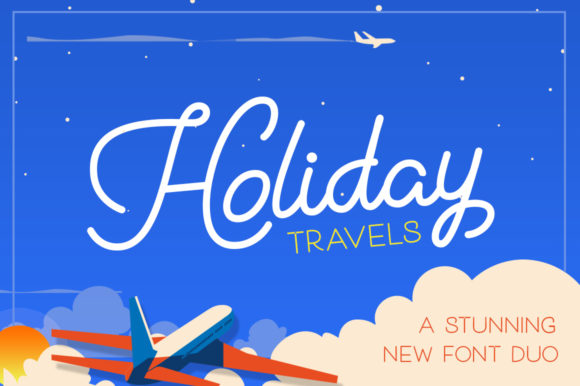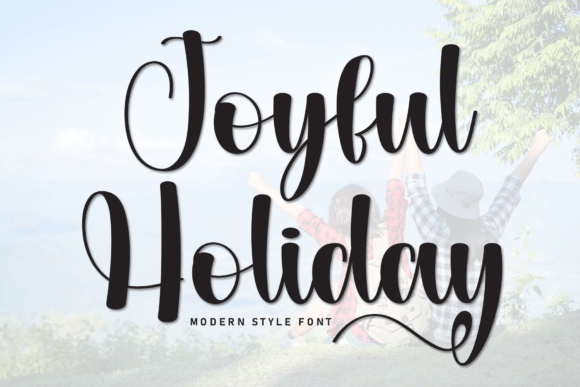
Why Joyful Holiday Stands Out as a Magical Script Font for Creative Projects
In the vast landscape of digital typography, finding a typeface that balances whimsy with sophistication is often a challenge. Many designers struggle to find a script that feels authentic without veering into the realm of illegibility or dated clichés. This is where Joyful Holiday emerges as a compelling option. It is not merely a decorative typeface; it is a carefully crafted tool designed to inject personality into visual communication. Whether you are curating content for social media or executing intricate DIY crafts, understanding the specific capabilities of this font can significantly elevate your design outcomes.
The distinct character of Joyful Holiday lies in its unique construction. It is described as a magical script font, a designation that reflects its fluid lines and elegant curves. Unlike rigid block letters or standard handwriting simulations, this font captures the spontaneity of calligraphy while maintaining a structured elegance. The strokes vary naturally in thickness, mimicking the pressure of a real brush or nib. This organic quality makes it particularly effective for projects that require a human touch, bridging the gap between professional design and personal expression.
Evaluating the Distinctive Qualities of Joyful Holiday
When analyzing Joyful Holiday against other available scripts, several key attributes define its utility. The primary strength of this font is its ability to convey emotion instantly. In marketing materials or event invitations, the right typeface sets the tone before a single word is read. Joyful Holiday achieves this through its "touch of elegance," which prevents the design from feeling too casual or overly chaotic. This balance is crucial for audiences aged 20 to 50, who often seek designs that are trendy yet timeless.
The font's versatility extends beyond simple text display. Because of its detailed ligatures and smooth transitions between characters, it works exceptionally well as a focal point. Designers often use it for headlines, logos, or signature elements where legibility is secondary to impact. However, this focus on aesthetics does come with specific considerations regarding usage. While the font excels in large formats, such as posters or banner images, its complexity might reduce readability when scaled down to very small sizes, such as mobile captions or fine print disclaimers.
Another defining feature is its adaptability across different mediums. Digital screens render the curves of Joyful Holiday with clarity, ensuring that the "magical" feel translates well from desktop monitors to smartphone displays. This makes it an excellent candidate for Instagram graphics, where visual appeal is paramount. The font's ability to turn creative ideas into art stems from its capacity to add a layer of texture and depth that flat sans-serif fonts simply cannot provide.
Comparative Analysis: Joyful Holiday vs. Standard Scripts
To make an informed decision about whether Joyful Holiday fits your project, it is helpful to compare it with broader categories of script fonts. The market offers two main types of scripts: those that mimic perfect cursive writing and those that resemble rough, hand-drawn sketches. Joyful Holiday occupies a middle ground, leaning more towards the refined side but retaining enough variation to avoid looking machine-generated.
- Standard Cursive Fonts: These fonts often prioritize uniformity and strict adherence to traditional calligraphy rules. While elegant, they can sometimes feel stiff or formal for modern holiday themes. Joyful Holiday offers more freedom, allowing for a lighter, more celebratory vibe.
- Rough Handwritten Fonts: These are popular for their authenticity but often lack the polish required for high-end branding. They can appear messy if not paired with careful layout design. Joyful Holiday provides a cleaner aesthetic that maintains the handwritten charm without sacrificing professionalism.
- Digital Display Scripts: Many fonts designed specifically for screens sacrifice detail for scalability. Joyful Holiday manages to retain its intricate details even at moderate sizes, making it superior for web headers and social media overlays.
This comparison highlights that Joyful Holiday is not a one-size-fits-all solution, but rather a specialized tool. If your project requires a font that screams "party" without losing class, this option is likely a strong contender. Conversely, if you need a font that conveys serious business or technical precision, a neutral serif or sans-serif would be a more appropriate choice.
Practical Applications and Use Cases
Understanding where Joyful Holiday shines best helps in evaluating its value for specific tasks. One of the most prominent applications is in social media content creation. Platforms like Instagram rely heavily on visual storytelling, and text overlays play a critical role. Using Joyful Holiday for quotes, announcements, or promotional posts can increase engagement by adding a festive and inviting atmosphere. The font's elegance ensures that the message feels curated rather than hastily assembled.
For DIY enthusiasts, the font opens up possibilities for physical crafting. When transferring designs onto paper, wood, or fabric, the clear definition of the letterforms ensures that the final product looks crisp. Whether creating custom gift tags, wedding stationery, or home decor signs, Joyful Holiday allows creators to produce results that look professionally typeset. The "magical" aspect of the font enhances the perceived value of handmade items, making them feel more special to the recipient.
However, there are limitations to consider. For body text or long-form reading, Joyful Holiday is generally unsuitable. The varying stroke widths and connected letters can cause eye fatigue over extended periods. A balanced design approach involves using Joyful Holiday for headings and accents, paired with a clean, readable sans-serif for the main content. This combination leverages the strengths of both typefaces, ensuring that the design remains visually striking while remaining accessible to all readers.
Weighing Tradeoffs and Decision Factors
Selecting the right font involves weighing various tradeoffs. With Joyful Holiday, the primary benefit is its ability to evoke a specific mood—joyful, elegant, and magical. This emotional resonance is difficult to replicate with other tools. However, this comes with the tradeoff of reduced versatility in formal contexts. You would not typically find this font used in legal documents or corporate reports, and attempting to force it into those spaces would undermine its effectiveness.
Another factor to consider is the licensing and compatibility of the font. Before integrating Joyful Holiday into a commercial project, it is essential to verify the usage rights. Some fonts have restrictions on how they can be used, particularly for digital ads or merchandise. Ensuring that you have the proper license protects you from legal issues and supports the creator.
Furthermore, the success of Joyful Holiday depends heavily on the surrounding design elements. Because it is a dominant visual element, it requires ample white space and thoughtful color pairing to shine. Cluttered backgrounds or competing fonts can diminish its impact. Designers should treat it as a star performer, giving it the stage it needs to be appreciated. If the design is already complex, adding another busy element alongside Joyful Holiday may result in visual noise.
When to Choose Joyful Holiday and When to Look Elsewhere
Deciding to use Joyful Holiday should be driven by the goals of your project. If your objective is to create a sense of celebration, warmth, or artistic flair, this font is likely the right choice. It is particularly effective during seasonal campaigns, holiday greetings, and personal branding initiatives that aim to connect on an emotional level. The font's ability to transform a simple idea into a piece of art makes it invaluable for creatives who want their work to stand out.
On the other hand, if your project prioritizes speed, neutrality, or strict hierarchy, you might need to explore alternatives. For instance, a news website or a data visualization dashboard requires fonts that prioritize clarity and consistency over style. In these scenarios, a geometric sans-serif or a classic serif would serve the functional needs better. Similarly, if you are designing for a global audience where cultural nuances matter, a font that is too stylized might not translate well across different regions.
In conclusion, Joyful Holiday represents a high-quality option for designers seeking to blend elegance with festivity. Its distinct characteristics offer a unique value proposition that stands apart from generic script options. By understanding its strengths, limitations, and ideal use cases, you can make a more informed decision about whether it fits your specific needs. Whether you are designing for Instagram, crafting a DIY project, or developing a brand identity, Joyful Holiday has the potential to be the finishing touch that turns a good design into a great one.