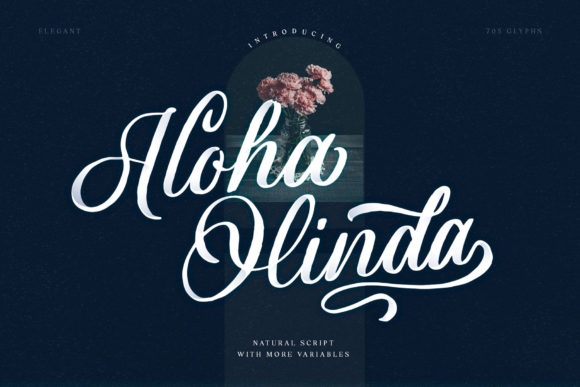
Unlocking Creative Potential with Aloha Olinda
In the modern digital landscape, where visual communication is paramount, selecting the right typography can make the difference between a design that feels generic and one that leaves a lasting impression. Many professionals, from graphic designers to small business owners, face the constant challenge of finding fonts that balance aesthetic appeal with technical reliability. This is where Aloha Olinda emerges as a standout solution. It is not merely a typeface; it is a dazzling script font that has been neatly crafted and highly detailed to serve as a versatile asset in any creative toolkit.
Whether you are designing a wedding invitation, creating a luxury brand identity, or adding a personal touch to a marketing campaign, the need for a font that exudes elegance without sacrificing functionality is universal. Aloha Olinda addresses these needs by offering a unique blend of artistic flair and structural integrity. Its potential to enhance any creation stems from its ability to convey emotion and sophistication instantly, making it an invaluable resource for anyone looking to elevate their visual storytelling.
Understanding the Core Value of Aloha Olinda
To truly appreciate the utility of Aloha Olinda, one must look beyond its initial appearance. While it is undeniably beautiful, its true strength lies in its construction. This font is a dazzling script that avoids the common pitfalls of many decorative typefaces, such as poor legibility or inconsistent stroke weights. Instead, it is neatly crafted with a high level of detail that ensures every character feels intentional and polished.
The primary goal of this typeface is to provide a seamless bridge between traditional calligraphy and modern digital requirements. For users who struggle to find scripts that work well on both print and web platforms, Aloha Olinda offers a practical answer. It brings the warmth and personality of hand-lettering into a format that is easy to integrate into professional workflows. By choosing this font, creators ensure that their projects maintain a high standard of quality while retaining a distinct, human-centric feel.
Solving Common Design Challenges
Designers often encounter specific hurdles when incorporating script fonts into their projects. The most frequent issue is compatibility; many elaborate scripts fail to render correctly across different devices or lack the necessary characters for full linguistic support. Another common challenge is the rigidity of the design, where a font looks good in isolation but fails to harmonize with body text or other design elements.
Aloha Olinda directly addresses these pain points through advanced encoding technology. The font is PUA encoded, which stands for Private Use Area encoded. This technical feature is a game-changer for professionals who require precision. Unlike standard fonts that may limit access to special characters, PUA encoding allows you to access all glyphs and swashes with ease. This means that complex ligatures, alternate forms, and decorative flourishes are readily available within your software interface, streamlining the design process and eliminating the frustration of hunting for hidden characters.
- Enhanced Flexibility: The extensive glyph set allows for endless customization, ensuring that no two designs look exactly the same.
- Seamless Integration: Because the font is fully encoded, it integrates smoothly with major design applications like Adobe Illustrator, Photoshop, and InDesign.
- Consistency: The neat craftsmanship ensures that even when using swashes and alternates, the overall weight and tone of the text remain consistent.
Practical Applications Across Industries
The versatility of Aloha Olinda makes it suitable for a wide array of industries. Its ability to adapt to different contexts means that it is not limited to just one niche. Whether you are a wedding planner, a boutique owner, or a content creator, understanding how to leverage this font effectively can significantly improve your output.
For the event industry, specifically weddings and celebrations, Aloha Olinda serves as an ideal choice for invitations, signage, and programs. The script's elegant curves evoke a sense of romance and celebration, setting the perfect tone before guests even open the envelope. However, its utility extends far beyond social events. In the realm of branding, businesses seeking to project a premium or artisanal image can use this font to create memorable logos and packaging.
Consider a coffee shop that wants to emphasize its commitment to hand-roasted beans. Using Aloha Olinda on their menu boards or cup sleeves adds a layer of authenticity and care that a standard sans-serif font cannot achieve. Similarly, in the fashion industry, clothing labels and lookbooks often rely on script fonts to convey luxury and exclusivity. Aloha Olinda provides the necessary sophistication to make these brands stand out in a crowded marketplace.
Tailoring the Approach for Different Users
Different users approach typography with varying levels of expertise and specific goals. Novice designers might be intimidated by the complexity of script fonts, fearing they will clutter their layouts. For these individuals, Aloha Olinda acts as a safe harbor. Its clean structure and clear letterforms make it forgiving to work with, allowing beginners to produce professional-looking results without needing years of experience in type selection.
On the other end of the spectrum, experienced typographers and art directors seek tools that offer granular control. They value the PUA encoding mentioned earlier because it empowers them to fine-tune every aspect of the text. For these experts, the "dazzling" nature of the font is a canvas for experimentation. They might use the various swashes to create dynamic headlines that break the grid, or combine the font with contrasting serif bodies to create striking visual hierarchies.
Regardless of the user's skill level, the outcome remains the same: a more engaging and visually appealing design. The key is to use the font with intention. Overusing Aloha Olinda can lead to a design that feels overwhelming, so it is recommended to use it sparingly for impact. It works best as a focal point—used for titles, key phrases, or signatures—while leaving the bulk of the information to simpler, more readable typefaces.
Maximizing Outcomes with Strategic Implementation
To get the most out of Aloha Olinda, users should focus on implementation strategies that highlight its strengths. One effective approach is to pair it with neutral backgrounds. The intricate details of the font shine brightest when there is nothing competing for attention. A solid color background or a subtle texture can allow the letters to pop, drawing the viewer's eye immediately to the message.
Another critical consideration is color selection. Since the font is highly detailed, using colors with too much contrast can sometimes obscure the finer lines. Experimenting with metallic foils, deep blacks, or soft pastels can reveal the full depth of the design. Furthermore, taking advantage of the PUA-encoded features allows for the creation of custom monograms or initials, adding a personalized touch that clients and customers deeply appreciate.
Ultimately, the decision to add Aloha Olinda to your font library is an investment in quality. It solves the problem of finding a script that is both beautiful and functional. By providing access to all glyphs and swashes with ease, it removes technical barriers and lets creativity flow. Whether you are enhancing a personal project or building a commercial brand, this font offers the potential to transform ordinary text into extraordinary art. As you explore your next creative endeavor, consider how the neat craftsmanship and detailed elegance of Aloha Olinda can help you achieve your vision.